

Incense Charcoal Wholesale: The Burn Supply Every Resin and Powder Sale Needs
A retailer's guide to stocking, displaying, and teaching customers to use charcoal.
What Is Incense Charcoal and Why Do Retailers Need It?
Incense charcoal is a burning disc used to heat resins, incense powders, and loose herbs so they release their scent. Without it, those products cannot be used, which makes charcoal one of the highest 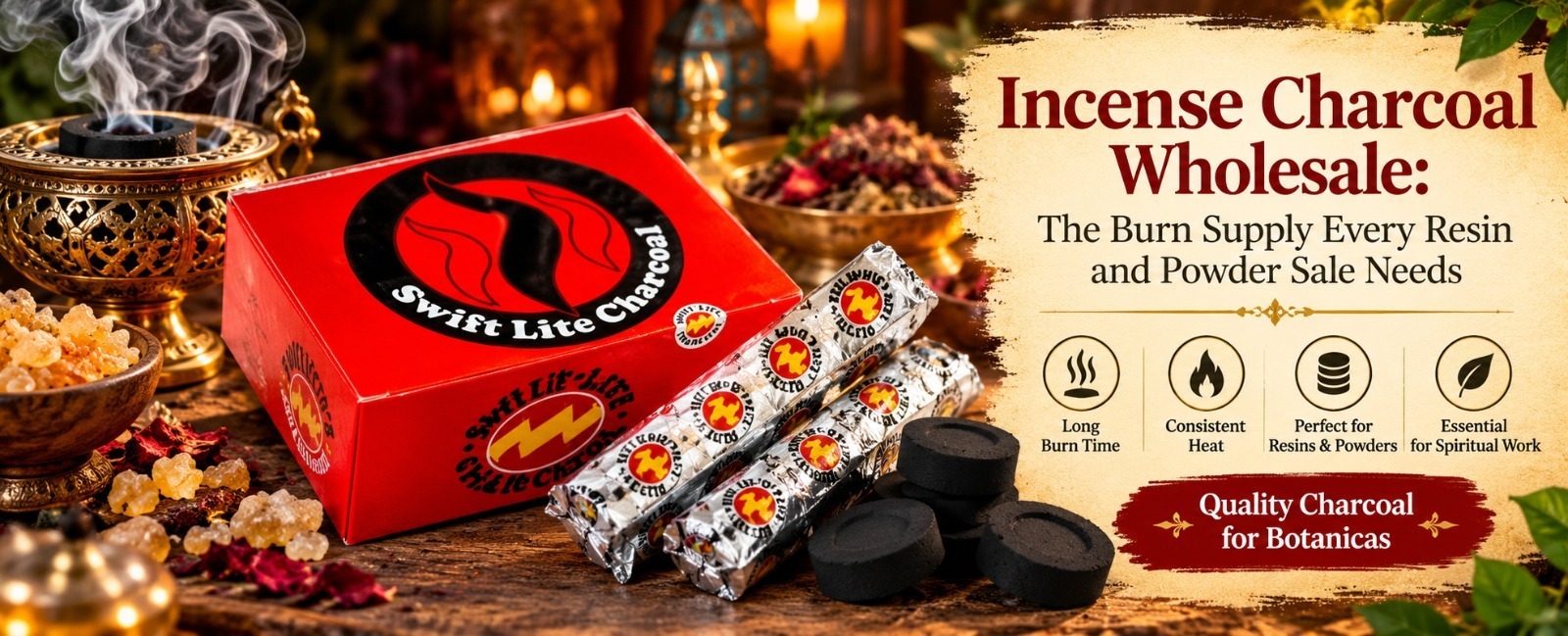 attach items in a spiritual store. Nearly every customer who buys a resin or powder needs it, and customers who forget it often leave without completing the purchase or come back annoyed. Stocking it prominently is a simple way to increase sales and customer satisfaction.
For retailers, charcoal is a low-cost, shelf-stable, repeat-purchase product. Customers who burn regularly run through it steadily, so it behaves like a consumable staple.
Which Products Need Charcoal?
Most customers do not know in advance which products require charcoal, so staff should be ready to point it out. These products are typically burned on a charcoal disc:
- Resins, such as the Premium Dragon's Blood Resin (50gm).
- Incense powders, such as the Reversible Incense Powder (50gm), the 7 African Powers Incense Powder (50gm), and the Spell Breaker Incense Powder (50gm).
- Sandalwood powder, such as the Sacred Sandalwood Incense Powder (50gm).
- Loose herbs and blends burned for ritual use.
Shelf talkers reading "Needs charcoal" next to each of these products remind customers and increase attachment rates.
Charcoal at VD Importers
VD Importers carries charcoal for retailers who want to cover the burn side of the incense category from one supplier. Buying it together with resins and powders keeps your order simple and your freight consolidated. Check the product page for current sizes and pack details before placing an order.
Camphor: A Second Burn Option
Camphor is sometimes burned on its own for its own scent and traditional cleansing use, and it does not always require charcoal. The Camphor Tablets (64pcs/1lb) give customers a simple option for burning a single tablet in a heat-safe holder. Offering both charcoal and camphor lets you serve customers with different preferences and experience levels.
Building a Burn Supplies Display
Instead of placing charcoal in a distant aisle, build a small display that shows the whole burning routine. A good display includes charcoal, a heat-safe burner or dish, a resin, and a powder, so the customer sees how the pieces fit together.
- Charcoal: charcoal
- Resin: Premium Dragon's Blood Resin (50gm)
- Powder: Reversible Incense Powder (50gm)
- Alternative burn: Camphor Tablets (64pcs/1lb)
Include a short how-to card showing the basic steps, written in plain language. New customers appreciate it, and it reduces questions at the register.
How to Teach Customers to Burn Safely
Safe use builds trust and repeat business. Staff can share these basics: light the charcoal in a heat-safe burner, let it reach a coating of grey ash before adding product, use only a small amount of resin or powder at a time, and never move a burner while the charcoal is hot. Placing sand or ash in the burner helps protect the surface and dissipate heat.
Customers who feel confident burning are likely to buy more resins and powders, so a few minutes of education at the counter often pays back across many purchases.
Common Customer Mistakes Your Staff Can Prevent
Many customers who are new to burning resins and powders make avoidable mistakes. Some try to light powder directly, which does notalways work. Some use too much product at once, producing heavy smoke. Others place a hot burner on an unprotected surface. Staff who recognize these problems can prevent them with a few words, which protects the customer and your reputation.
A short printed guide placed with the charcoal covers most of these issues. Keep it simple: what charcoal is for, how to light it, how long to wait, how much product to add, and how to cool it safely. Customers appreciate clear instructions, and they tend to return when their first experience goes well.
Why Charcoal Raises Your Average Sale
Charcoal rarely sells alone. It is bought with resins, powders, and burners, which means every charcoal sale is also a sign of at least one other purchase. Retailers who track this often find that customers who buy charcoal return more frequently than customers who buy only decorative items, because burning is an ongoing habit.
Placing charcoal next to products that need it also helps the customer who came in for a single item. They see the missing piece, add it to the basket, and leave with everything they need. That is better service and better revenue.
Ordering and Storage Tips
Charcoal absorbs moisture, which can make it harder to light. Store it in a dry place, keep packaging closed, and avoid placing it near sinks, windows, or humid areas. Rotate stock so older packs sell first. When you order, combine charcoal with resins and powders to simplify freight, and review current pack details on the product page before ordering.
Since charcoal is a steady seller, it suits a standing reorder. Check stock levels monthly and reorder before you drop below a safe minimum. That keeps resin and powder sales from stalling because the burn supply ran out.
Charcoal for Different Store Types
Core spiritual stores, such as botanicas and Hoodoo supply shops, sell charcoal constantly because their customers burn resins and powders as part of regular practice. Religious supply stores need it for church-style incense and similar uses. Metaphysical and Wiccan shops sell it alongside resins, herbs, and ritual tools. Even holistic and wellness stores that sell loose incense benefit from carrying it so their customers can use what they buy.
Because the need cuts across so many store types, charcoal is a low-risk product to add. It rarely becomes dead stock, since it is consumed with use and stays relevant as long as you sell products that require it. Start with a modest quantity, watch the sell-through for a month, and adjust upward as your resin and powder sales grow.
Over time, you may find charcoal one of your most predictable items, which makes forecasting and budgeting easier for the whole store.
A final practical point: keep a few demonstration pieces behind the counter, such as a small heat-safe burner and a sample of resin, so staff can show the full process in under a minute. Customers who see how it works buy with confidence, and they are more likely to purchase the burner, the resin, and the charcoal in one visit rather than splitting the purchase across several trips.
|
⚠ SAFETY & STORAGE |
Frequently Asked Questions
What is charcoal used for in incense burning?
It is the heat source that lets resins, powders, and herbs release their scent. Without it, those products will not burn properly.
Do all incense products need charcoal?
No. Sticks and cones burn on their own, and camphor can be burned without charcoal. Resins and powders typically need it.
What should I sell with charcoal?
Pair it with resins, incense powders, a heat-safe burner, and a simple how-to card to raise your average sale.
Is charcoal a good repeat-purchase item?
Yes. Customers who burn regularly use it steadily, so it behaves like a staple and supports predictable reorders.
Ready to stock charcoal and burn supplies alongside your resins and powders? Become a VD Importers wholesale account for bulk pricing and current catalog access.